
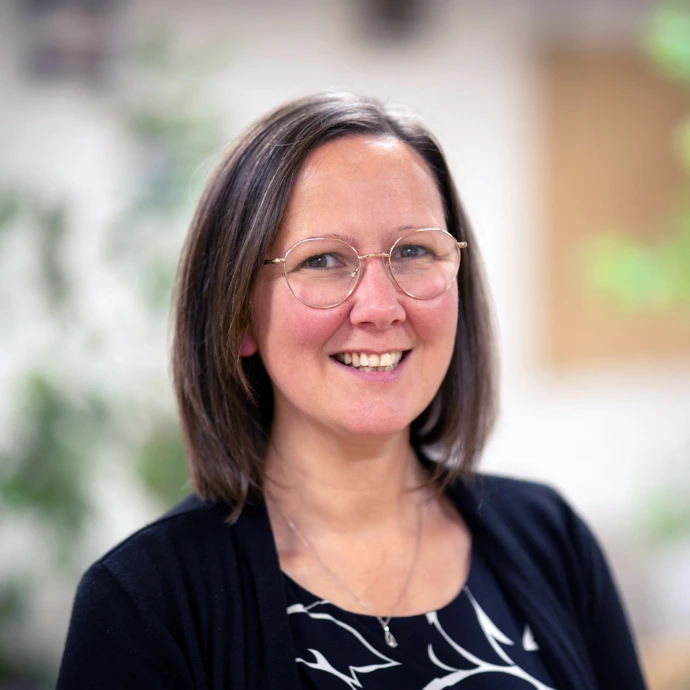
By Rev Canon Jo McKee
Head of Leadership Development
There is a moment in almost every conversation about neurodiversity when the subject stops being "them" and quietly becomes "us."
That happened again during a recent CPAS training session. People arrived wanting to better understand members of their congregations, colleagues, clergy, and volunteers. Yet as we explored different neurodivergent experiences, many found themselves recognising a child, a spouse, a friend, a church member, or even themselves, in what was being described. What often begins as a conversation about supporting others quickly becomes a conversation about understanding people more deeply.
I find that fascinating because it reveals something important about being human. We are often much more diverse in how we think, process, communicate, and experience the world than we realise. The challenge is learning to see those differences without immediately labelling them as problematic.
One of the themes that stood out for me was the importance of self-awareness. That sounds simple, but it is often the hardest thing of all, especially when someone has gone through life without a diagnosis or any framework for understanding why certain things feel more difficult than they seem to for everyone else.
In the session’s chat there was a comment about a playgroup leader whose difficulties with timekeeping had become a source of frustration. The easy assumption was carelessness or lack of commitment. The reality was more nuanced. Their brain was simply wired differently. What they needed was not criticism but understanding, patience, and support.
How often do we make assumptions about people's motivations when, in reality, we do not understand their experience?
Beyond behaviour to the person underneath
As Christians, this matters because Jesus consistently looked beyond behaviour to the person underneath. Again and again, He saw individuals whom others had misunderstood, judged, or dismissed. He asked questions. He listened. He made space for people. The Gospels reveal a Saviour who was endlessly curious about people rather than quick to condemn them.
That posture feels particularly important in conversations about neurodiversity.
One phrase I hear regularly is, "We're all on the spectrum somewhere." It is usually offered kindly and pastorally, but I have come to realise it can unintentionally minimise people's experiences. Autism is not simply having a few familiar traits. It is a lifelong neurodevelopmental difference that shapes how someone experiences the world every day.
Rather than rushing to reassure ourselves that we all have similar struggles, perhaps a better response is humble curiosity. We do not need to fully understand someone's experience to honour it. We simply need to be willing to listen.
The training also highlighted how often the barriers neurodivergent people face are created by systems rather than individuals. A dyslexic priest struggling with forms that have had spell-check removed is not demonstrating a personal failing. A church member overwhelmed by unclear communication is not being difficult. These are often design issues.
The encouraging thing is that design can change.
Simple adjustments, a clear agenda, visual information, extra processing time, thoughtful feedback, predictable communication, often help everyone, not just neurodivergent people. Accessibility is rarely about giving special treatment; more often it is about creating environments in which more people can flourish.
I also found myself reflecting on the irony that this particular training took place online. We chose that format partly to increase accessibility, yet I personally find online delivery much harder. It can be difficult to read a room, interpret reactions, or know how things are being received. Afterwards, I often wonder whether what I said connected at all.
Reflecting on this experience afterwards gave me a small glimpse into what many neurodivergent people describe every day: navigating uncertainty in communication and trying to interpret cues that others seem to pick up naturally.
The wiring we ignore
Jo explores neurodiversity and the gap in how we lead and are led in church

Perhaps this is where theology and neurodiversity meet most powerfully.
The New Testament vision of the Church is not one where everyone thinks, behaves, or experiences life in the same way. Paul describes a body made up of many parts, all necessary, all valuable, all belonging. The goal is not uniformity but unity in Christ.
If we take that seriously, neurodiversity is not a problem to be managed at the edges of church life. It is part of the rich diversity of God's people. The challenge before us is not helping neurodivergent people fit our existing structures, but creating churches generous enough to receive the gifts, perspectives, honesty, creativity, and insight that neurodivergent people bring.
Jesus never asked people to become someone else before they belonged. He welcomed them as they were and transformed individuals and communities through that welcome.
Maybe that is our calling too.
To become churches that are truly "all one in Christ", places where different minds, different experiences, and different ways of being human are not simply accommodated but valued as gifts from God. When that happens, we do more than support neurodivergent people. We become more compassionate, more attentive, and ultimately more like Jesus himself.
Helpful resources
Books
- ADHD is my Superpower - by Soli Lazarus.
- Faith, Hope & Autism: Learning to Love Neurodiversity - by John Allister
- Why Does Everybody Hate Me? - by Alex Partridge
- Tim Sullivan novels featuring an autistic detective.
Websites & Online Resources
- includedbygrace.co.uk — Resources and discussions about making church accessible to all.
- Made By Dyslexia - Empowering dyslexic thinking
- Access to Work — Government support for people with a disability or health condition. Tip shared: phone 0800 121 7479 (9am–5pm) and they will help you fill in the form.
- Neurodiversity (Barrier-Free Belonging) Church of England
- Firstwelisten.co.uk — home of the LISTEN framework; faith-based, developed with parent carers of neurodivergent individuals.
..