
The church has spent far too long talking about urban mission rather than listening to those who are in it.
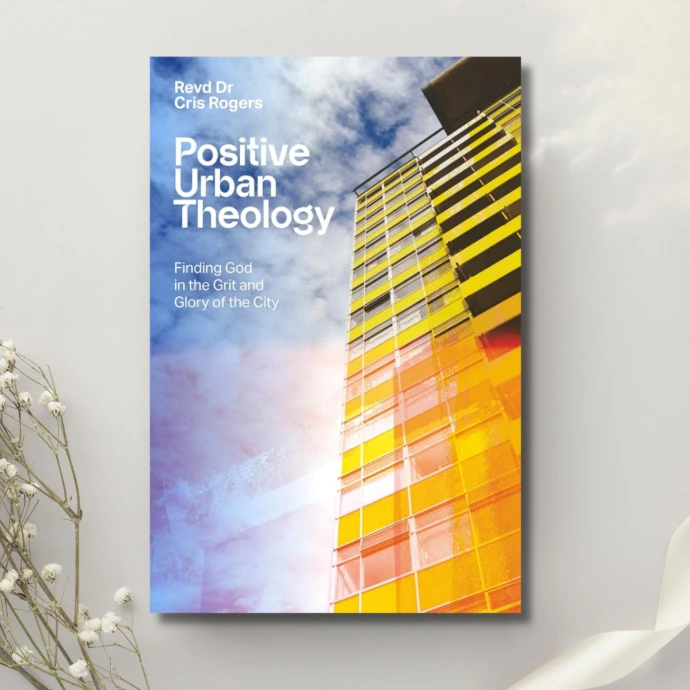
With Positive Urban Theology, Revd Dr Cris Rogers walks us out of strategy meetings in comfortable board rooms and straight onto the dirty pavement of the city street complete with rubbish and weeds, evidence of a place long neglected by the powers that be. Here he carries on the conversation, speaking with the unmistakable authority of an insider.
Rogers has given us a work that is in his own words, ’the toolkit rather than the library’, designed to empower us to take action and learn about the kingdom of God by putting our faith into practice. An inspirational collection of theology, story and strategy for those of us serious about Christ-centred, holistic ministry in the city.
He writes from within the mess, the beauty, and the resilience of estate life. His central thesis, that we must shift from deficit-based language to an asset-based approach, is a prophetic challenge to institutional habits that too often view urban communities as problems to be solved rather than places to encounter God. His first chapter expounds the theme of joy, joy that then ripples through the book, appearing again and again as God works in extraordinary ways in unexpected places.
What strikes you most about this work is his unapologetic pragmatism. Rogers understands that urban mission requires more than just good intentions; it demands an incarnational presence. He challenges the church to move beyond imported models that do not ‘fit the soil’ of the estates we serve. Instead, he invites us to roll up our sleeves and practice stabilitas, the Benedictine commitment to staying put.
For those of us who have felt the tension between institutional expectations and the ground-level reality of ministering on an estate, Rogers’ insistence that local leaders should not have to shed their working-class identity to serve the wider church is refreshing, liberating, and long overdue.
The book is profoundly incarnational. Rogers does not separate the gospel from the concrete realities of housing, health, and education. He holds up a vision of discipleship that engages the whole of life, in all its grittiness viewing the urban context as a gift and a blessing, a place to encounter the glory of God. He helps us see that where the world might see brokenness, God sees diamonds waiting to be polished.
Whether your setting is urban or not, this book acts as a steadying hand, reminding us all that lasting transformation is not about top-down imposition. It is about the work of God as we do the slow, faithful work of apprenticing and empowering those God is already raising up in our communities.
Positive Urban Theology is a manual for those who want to get real. It is challenging, honest, and filled with the kind of hope that can only be forged in the fire of genuine experience. So read this book. Digest it. Let it challenge your patterns, shape your leadership, and, most importantly, help you fall in love with the place where God has called you to serve.
Jo Trickey
Learning and Partnership Development Lead, CCX