
Book Review – The Next Conversation: Argue Less, Talk More, by Jefferson Fisher
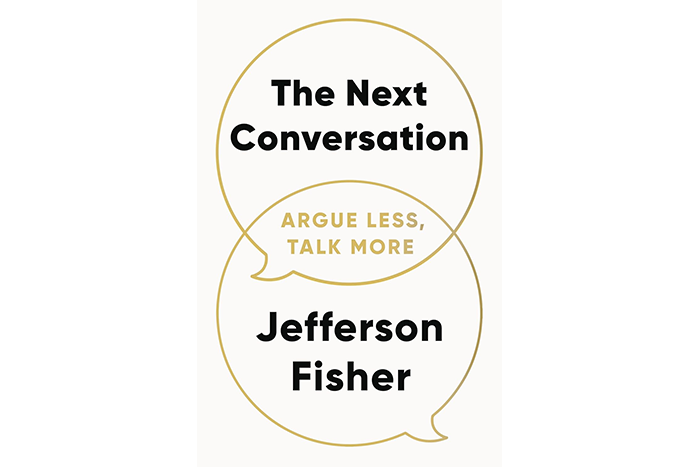
Difficult conversations are part and parcel of leadership. Whether it’s disappointing someone, terminating a ministry role, counselling someone after a bereavement, disagreement on something important or navigating aggression in meetings, most clergy will have to engage in challenging conversations on a regular basis. Most clergy don’t love this aspect of the role, so anything that we can do to be equipped is worth the investment.
I first came across Jefferson Fisher as a guest on Steve Bartlett’s Diary of a CEO podcast, but I must have been hiding somewhere. He is hugely influential, with a vast online following and a massive eponymous podcast of his own. This book is a treasure trove of practical wisdom for navigating conversation. He focuses on confidence, (self-)control, and connection.
Illustrating his ideas with great stories from his work as a trial lawyer, he offers opening lines, top tips and valuable take-aways. I listened to the book on audible, but I would like to approach it as a written work – the pages would be littered with page markers! I particularly like his judicial use of pauses and silence, as well as his excellent ideas for questions to help clarify and offer grace. The theory behind the book’s title is that rather than trying to change a whole relationship in one go, begin with a thought-through approach to the next conversation. And view it as an opportunity to learn rather than having something to prove.
His assertion is that we should never try to win arguments, because in reality the prize is only the opportunity to apologize first! Winning arguments leads to disconnection, loss of trust, and respect. I love his advice on how to say no with kindness, and how to approach difficult conversations head on, with clarity and without fluff. There is much here for regular conversation, as well as for broaching tricky topics, and a chapter on boundaries.
There is advice on how to diffuse and offer a gracious way out when someone has entered the ignition phase, and how to cool down when you recognise your own fuse is short. He warns against defensiveness which can be triggered when we feel under threat because it leads to disconnection. Conversation is so key to our lives as leaders. This book is piled high with actionable learning. There are some examples that need a little translation for a British audience, but nothing alienating. Check out his podcast for bite-sized content in a similar vein.
January 2026 Lead On Review by Sarah Pix, CPAS Leadership Enabler